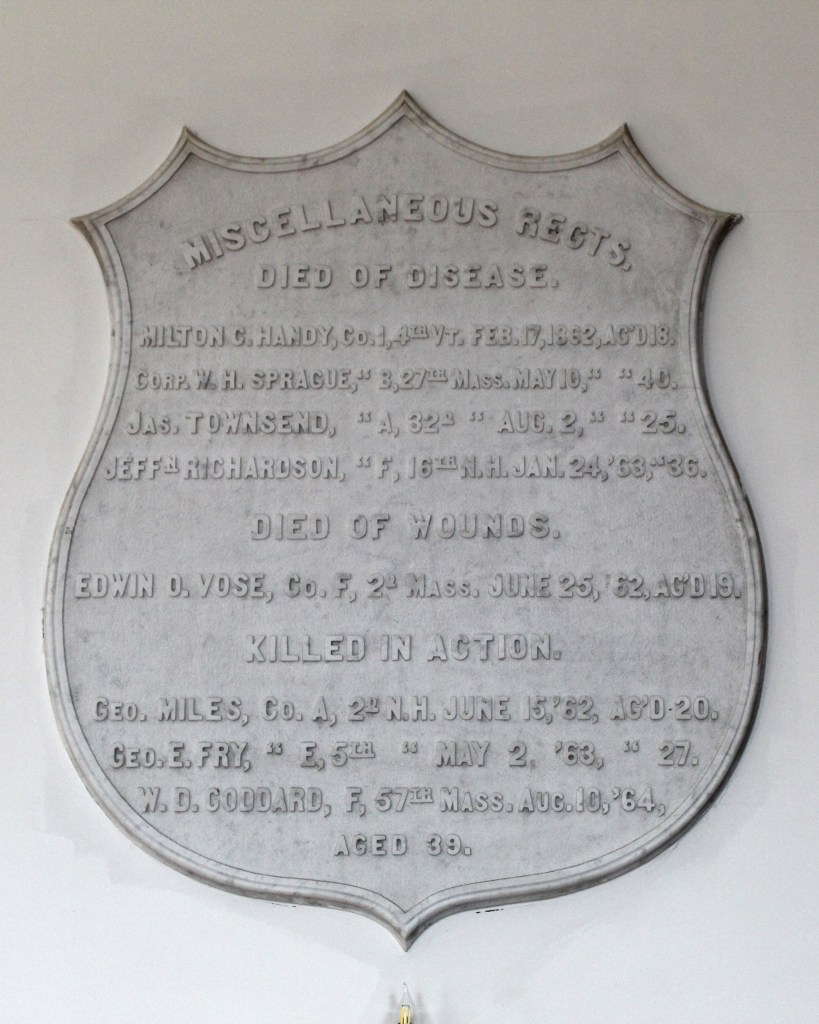

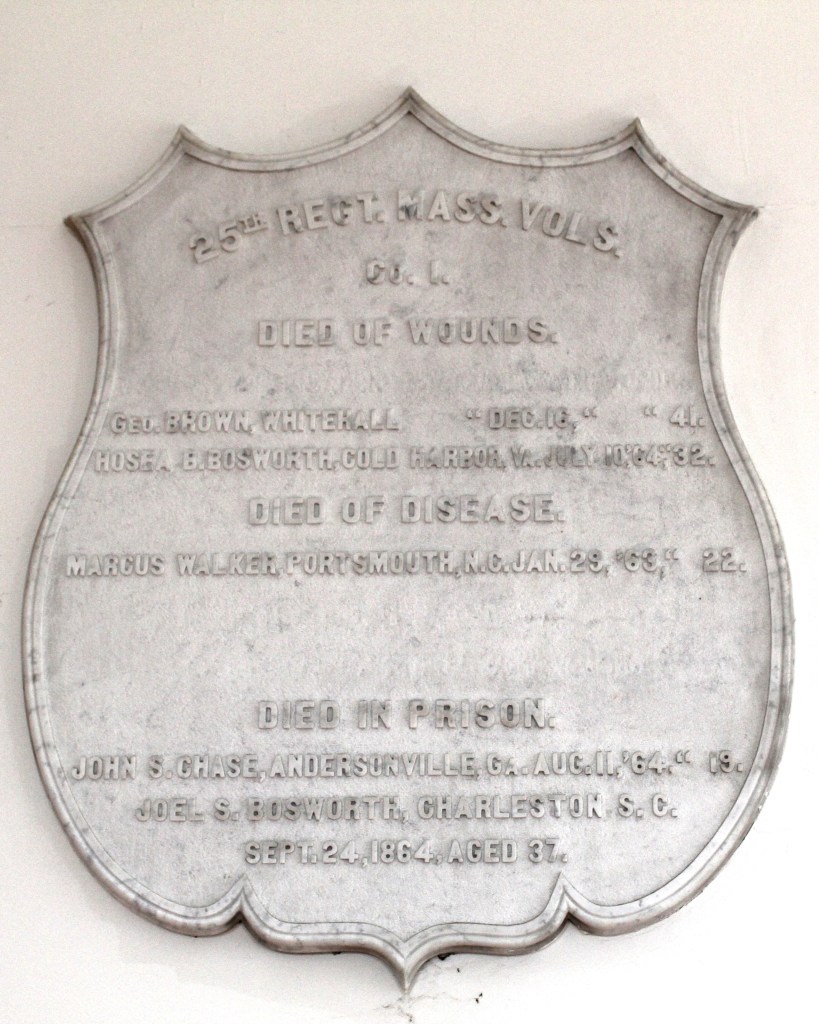
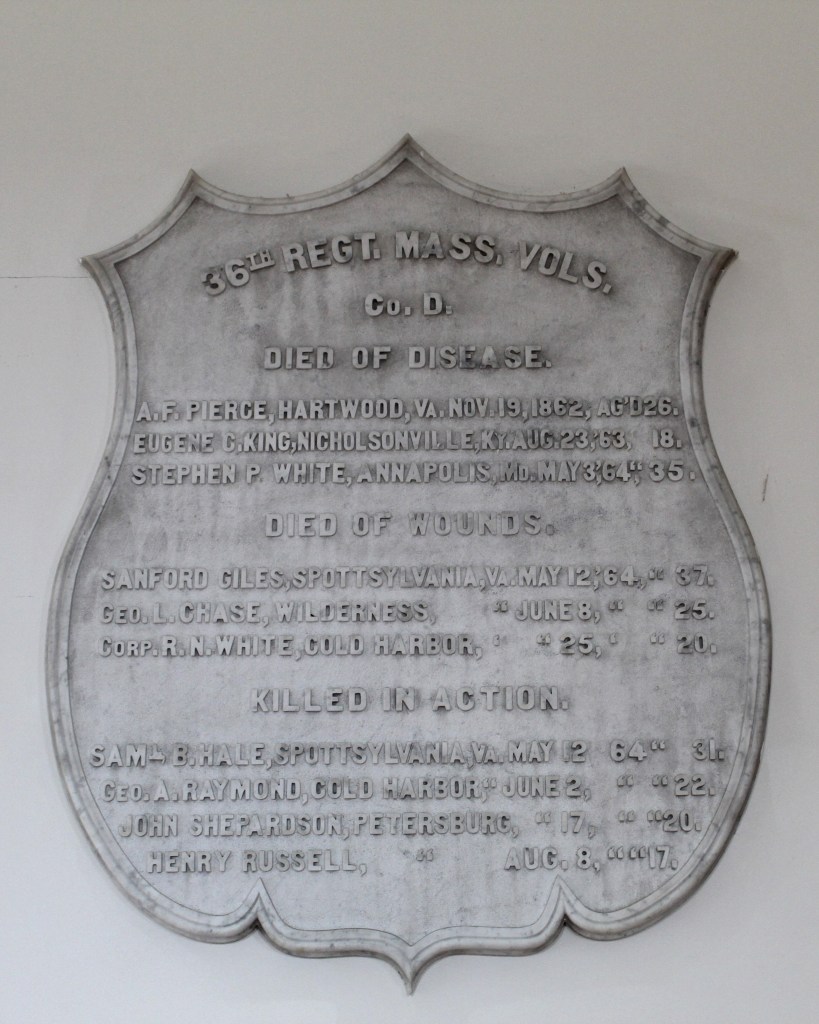
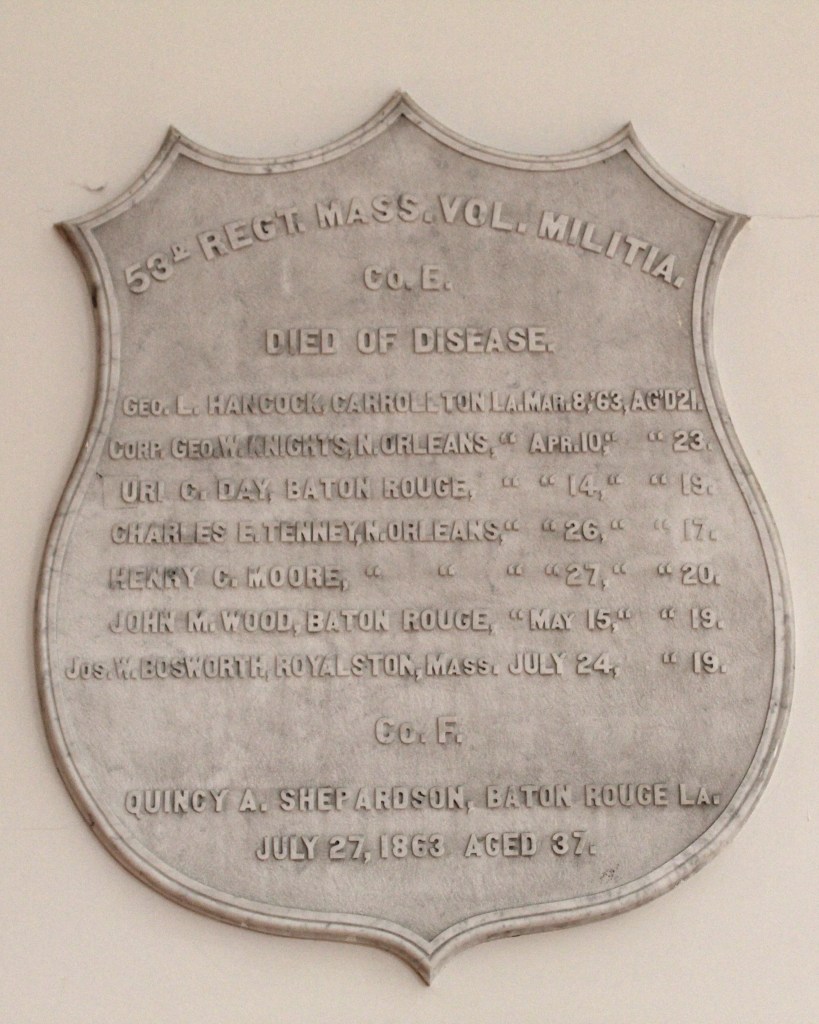
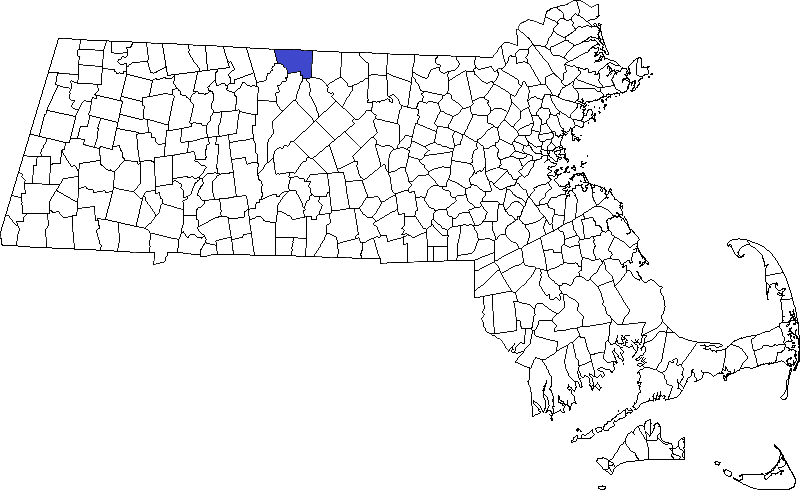
Location: Second floor, Town Hall, 13 On the Common, Royalston
Coordinates: 42°40’32.1″N 72°11’16.0″W
Date dedicated: December 17, 1867
Design/Sculptor/Manufacturer: B. H. Kinney of Worcester, sculptor
Royalston’s Civil War memorial consists of five marble tablets located on the second floor of the town hall, a space originally known as Memorial Hall. These tablets were a gift from Joseph Raymond, a prominent Royalston businessman, politician, and philanthropist who also funded the town’s first public library. Benjamin Harris Kinney, an accomplished sculptor from Worcester, carved the tablets from Italian marble. They were installed in the new town hall, which, along with the tablets, was dedicated on December 17, 1867, with formal ceremonies. Governor Alexander Bullock, a Royalston native, was among the notable participants.[1]
In 1860, Royalston had a population of 1,486. Like many Massachusetts hill towns, its population had been declining in the decades leading up to the Civil War as families moved to growing regional cities or sought opportunities in the western United States.
Lysander Cutler, nicknamed the “Gray Wolf,” was a notable general during the war. Originally from Royalston, he moved away from the town long before the Civil War at age 21. In Maine, Cutler became a wealthy mill owner. He later moved to Wisconsin. During the war, he was one of the commanders of the famed Iron Brigade and then commanded a division of the V Corps. He was badly wounded in the Battle of Globe Tavern in 1864 and resigned due to his injuries.
The town’s commitment to the Union cause is thoroughly documented in The History of the Town of Royalston, Massachusetts by Lilley Brewer Caswell which includes detailed records of soldiers from Royalston who served during the Civil War.
Just three days after the Baltimore Riot, which marked the first Union casualties of the war, a war meeting was held in Royalston, resulting in the first 19 volunteers.[2] Among them, five men joined the 2nd Massachusetts Infantry as the town’s first soldiers to march off to war. Thirty Royalston men (the largest number in a single unit) served in the 25th Massachusetts, a Worcester County regiment.[3] Caswell notes that during the first seven months of the war, 60 men from Royalston volunteered (including five who served in Vermont and New Hampshire unit—no surprise given the town’s location). Of these, fully one quarter did not survive.[4]
The town’s first casualty was Chauncy Norcross, a 21-year-old private in the 21st Massachusetts Infantry, who died from wounds received during the Battle of Roanoke Island. Later in the war, 25 more men from Royalston joined the 53rd Massachusetts Infantry, which participated in the Port Hudson Campaign. This regiment suffered a high death rate from disease, largely due to poor camp conditions in the Louisiana bayous.
In all, according to Caswell, 147 men were credited to Royalston during the war.[5] The tablets in town hall indicate that 33 Royalston men were lost in the war: 16 to disease, 2 in prison, 7 due to wounds in battle, and 8 killed in action. This is a fairly high casualty rate as compared to other Massachusetts towns.
[1] “Royalston Festival,” Worcester Daily Spy, December 30, 1867, 3.
[2] Lilley B. Caswell, The History of the Town of Royalston, Massachusetts (Royalston, MA: Town of Royalston, 1917), 416.
[3] Caswell, 417.
[4] Caswell, 419.
[5] Caswell, 421.