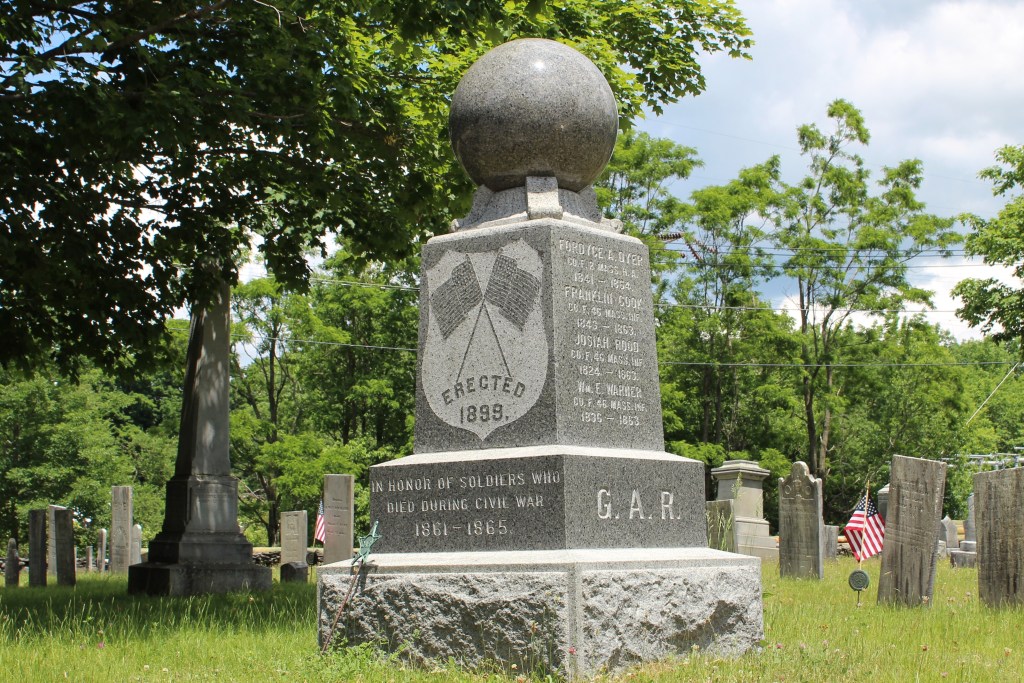
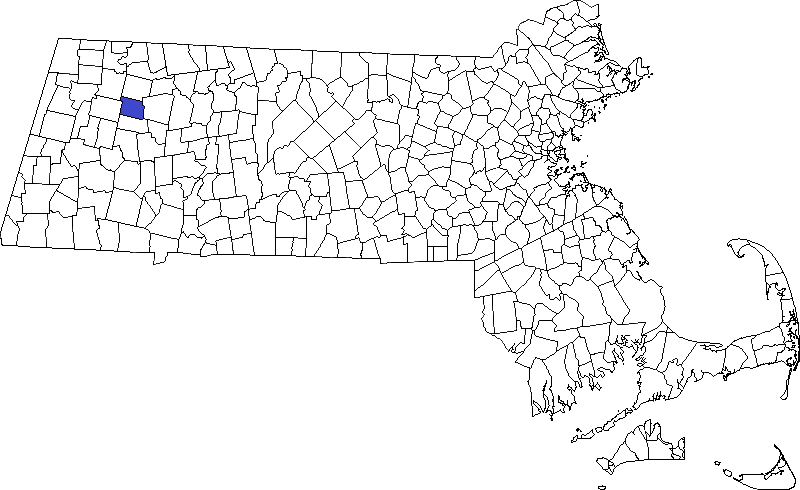
Location: Hilltop Cemetery, North Central and Union Streets, Plainfield
Coordinates: 42°31’16.8″N 72°54’51.0″W
Date dedicated: 1898
Design/Sculptor/Manufacturer: Unknown
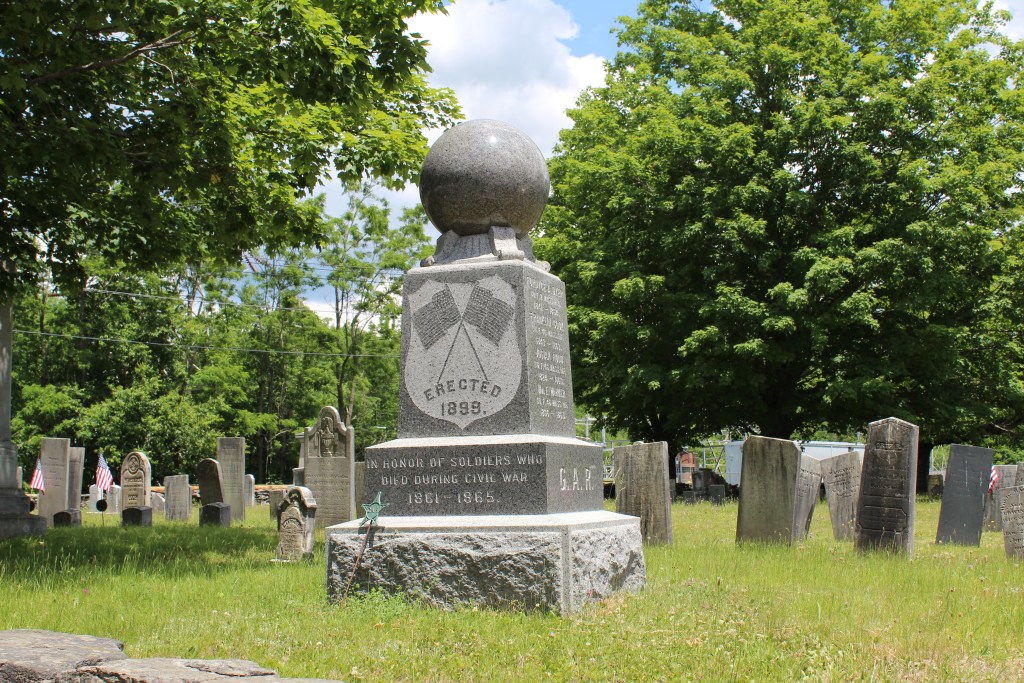
The Grand Army of the Republic (GAR) Civil War monument in Plainfield’s Hilltop Cemetery stands as a tribute to the soldiers from the town who sacrificed their lives during the Civil War. Erected in 1898, the monument was brought to fruition through the efforts of the Mountain Miller Post #198 of the GAR, which raised $375 for its construction. The post, chartered in 1889, was named after Deacon Joseph Beals (1751–1813), a highly respected figure in the small hill town. Known as “The Mountain Miller,” Beals’ influence endured long after his death.[1]
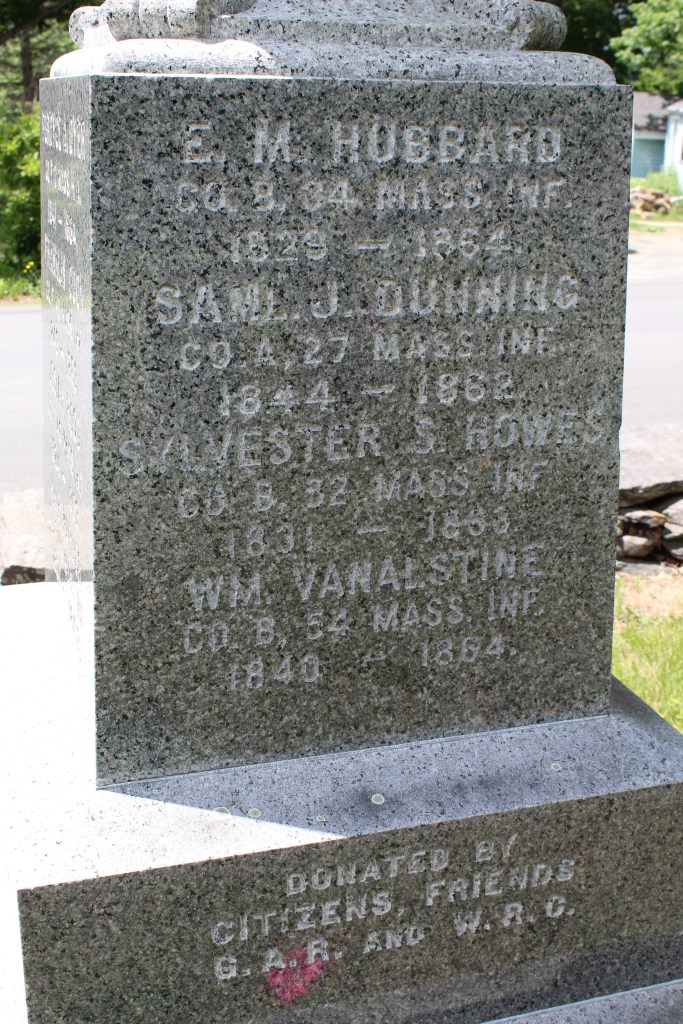
The monument honors the names of twelve Plainfield soldiers who perished in the Civil War (about half of these resided in other towns at the start of the war but were likely Plainfield natives and therefore included). Of these twelve, five served with the 46th Massachusetts Infantry, a western Massachusetts unit primarily composed of men from Hampden County, as well as more remote hill towns to the west and north. This nine-months regiment served along the North Carolina coast, conducting occasional inland expeditions, including the Goldsboro Expedition. Disease was rampant in their camps near New Bern, leading to many fatalities. It appears that over one-third of Plainfield’s fallen succumbed to illness in North Carolina. The exact causes of death for Franklin Cook and William Warner of the 46th Massachusetts are unrecorded, though they do not appear to have been battle-related. Alden H. Dyer, Fordyce Dyer (who rose to 1st Lieutenant and was later transferred to the 2nd Massachusetts Heavy Artillery, also stationed in New Bern), and Josiah Rood are all known to have died of disease.
Erastus M. Hubbard, who served with the 34th Massachusetts Infantry, was captured and died at Andersonville Prison on August 17, 1864. The fact that even a small town like Plainfield (one of the smallest in the state) lost a man to Andersonville supports a longstanding belief of mine that nearly every town across New England lost someone to that infamous prison camp.
One of Plainfield’s fallen served with the famed 54th Massachusetts, the black regiment portrayed in the film Glory. He survived the regiment’s charge on Fort Wagner near Charleston, South Carolina, but was killed in action during the Battle of Olustee, Florida, in February 1864.
Charles Gurney of the 37th Massachusetts died of wounds sustained at Gettysburg. Urban Crittenden, also of the 37th Massachusetts, was killed in action during the Battle of the Wilderness. Samuel Dunning, who served with the 27th Massachusetts, was killed in action during the Battle of New Bern, North Carolina, when that city was first taken by Union forces in 1862. Sylvester Howes of the 52nd Massachusetts died of disease on the Mississippi River while being transported north on his way home from service in Louisiana.
The monument remains a centerpiece for Memorial Day observances. Originally organized by the local GAR Post, these traditions were taken over by the local Grange in 1919 after the disbanding of the GAR post. Today, the Plainfield Historical Society oversees these commemorations, ensuring that the sacrifices of the town’s soldiers are not forgotten.[2]


[1] Alfred S. Roe, Monuments, Tablets and Other Memorials Erected in Massachusetts to Commemorate the Service of Her Sons in the War of the Rebellion, 1861-1865 (Boston: Wright & Potter Printing Company, 1910), 95.
[2] Laurie Austin, “Memorial Day in Plainfield,” Plainfield Historical Society